What Is a Profit Split in Prop Trading?
What a profit split is, how to calculate your payout, what counts as a good split and why payout rules matter more than the percentage.
On this page
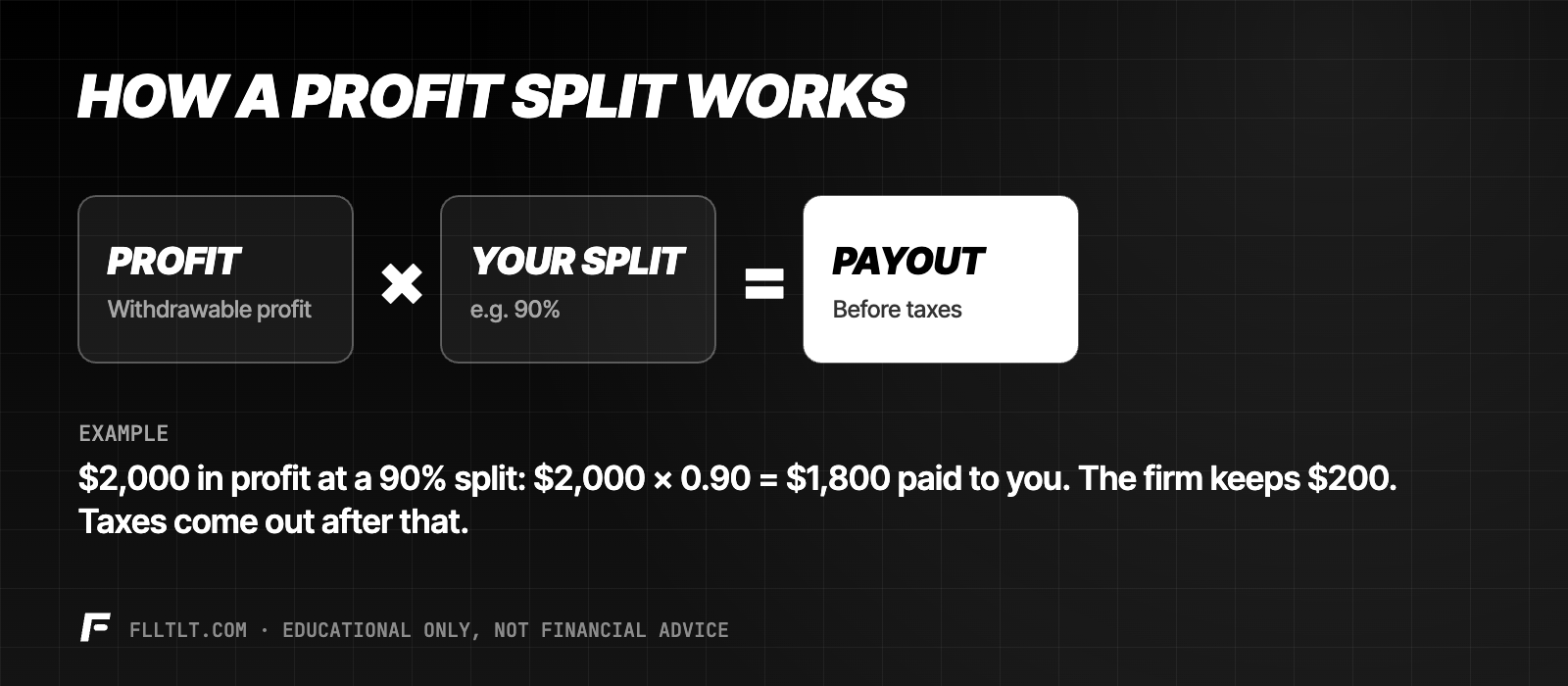
The short answer: A profit split is the share of profits a prop firm pays you from a funded account. If your split is 90% and you request a $2,000 payout, you receive $1,800 and the firm keeps $200. Common splits for traders range from about 80% to 90%, and some firms pay 100% of an initial amount before a split applies. The split is only part of the deal: payout rules and fees matter just as much.
Key takeaways
- The split is the percentage of funded profits you keep.
- Payout = withdrawable profit × your split.
- Many firms advertise splits around 80–90%, sometimes 100% of early profits.
- Payout minimums, schedules and caps can matter more than the headline split.
- Payouts are usually taxable income.
How does a profit split work?
You only get a split on profits the firm allows you to withdraw. Some firms require a minimum profit level, a minimum number of trading days or a buffer above the drawdown before your first payout.
What's a good profit split?
Higher is nicer, but it's rarely the deciding factor. Compare these too:
- Payout schedule: how often you can request.
- Minimums and caps: the smallest and largest payout allowed, especially early on.
- Conditions: trading days, consistency rules, buffers.
- Fees: monthly fees and activation fees come out of your real return.
A 90% split you can't access for months can be worth less than an 80% split paid quickly.
Do payouts affect the drawdown?
At some firms, yes. Withdrawing profit lowers your balance, which can bring it closer to the drawdown. Read how your firm handles it before your first request. See your first week as a funded trader.
Are profit split payouts taxed?
Usually. In the U.S., prop firm payouts are commonly reported as independent contractor income. Set some aside and talk to a tax professional. More in prop firm vs your own account.
From the desk Indy trades futures in prop firm accounts and records results in points on Day Trader Income. The split is the number on the sales page. The payout terms are the number in your bank account. Read the terms.
The bottom line
Your payout is profit times your split, minus taxes and fees. Look past the headline percentage to the payout rules, schedule and costs. Those decide what you actually take home.
Educational only. Not financial or tax advice.
FAQ
What is a profit split in prop trading?
A profit split is the share of funded account profits a prop firm pays you. At a 90% split, a $2,000 payout request pays you $1,800.
What is a typical prop firm profit split?
Many firms advertise trader splits of about 80% to 90%, and some pay 100% of an initial amount of profit before the split applies.
How do you calculate a prop firm payout?
Multiply your withdrawable profit by your split percentage. Taxes and any fees reduce what you keep.
Is a higher profit split always better?
Not always. Payout schedules, minimums, caps, conditions and fees can matter more than the headline percentage.
Are prop firm payouts taxable?
Usually. In the U.S., payouts are commonly reported as independent contractor income. Ask a tax professional about your situation.