How to Identify a Trend (Higher Highs and Higher Lows)
How to tell an uptrend, downtrend or range from swing highs and lows, how to confirm it and how to spot when a trend is ending.
On this page

The short answer: A market is in an uptrend when it makes higher highs and higher lows, and a downtrend when it makes lower highs and lower lows. If it does neither, it's ranging. Traders confirm a trend with simple tools, like price staying above or below a rising or falling moving average or VWAP. A trend is considered intact until price breaks the last swing low in an uptrend, or the last swing high in a downtrend.
Key takeaways
- Uptrend: higher highs and higher lows. Downtrend: lower highs and lower lows.
- No clear sequence means a range. Trend strategies struggle there.
- A break of the last higher low is the first warning an uptrend is ending.
- Moving averages and VWAP help confirm what the swings already show.
- Check a higher time frame before trading a lower one.
What does a trend look like?
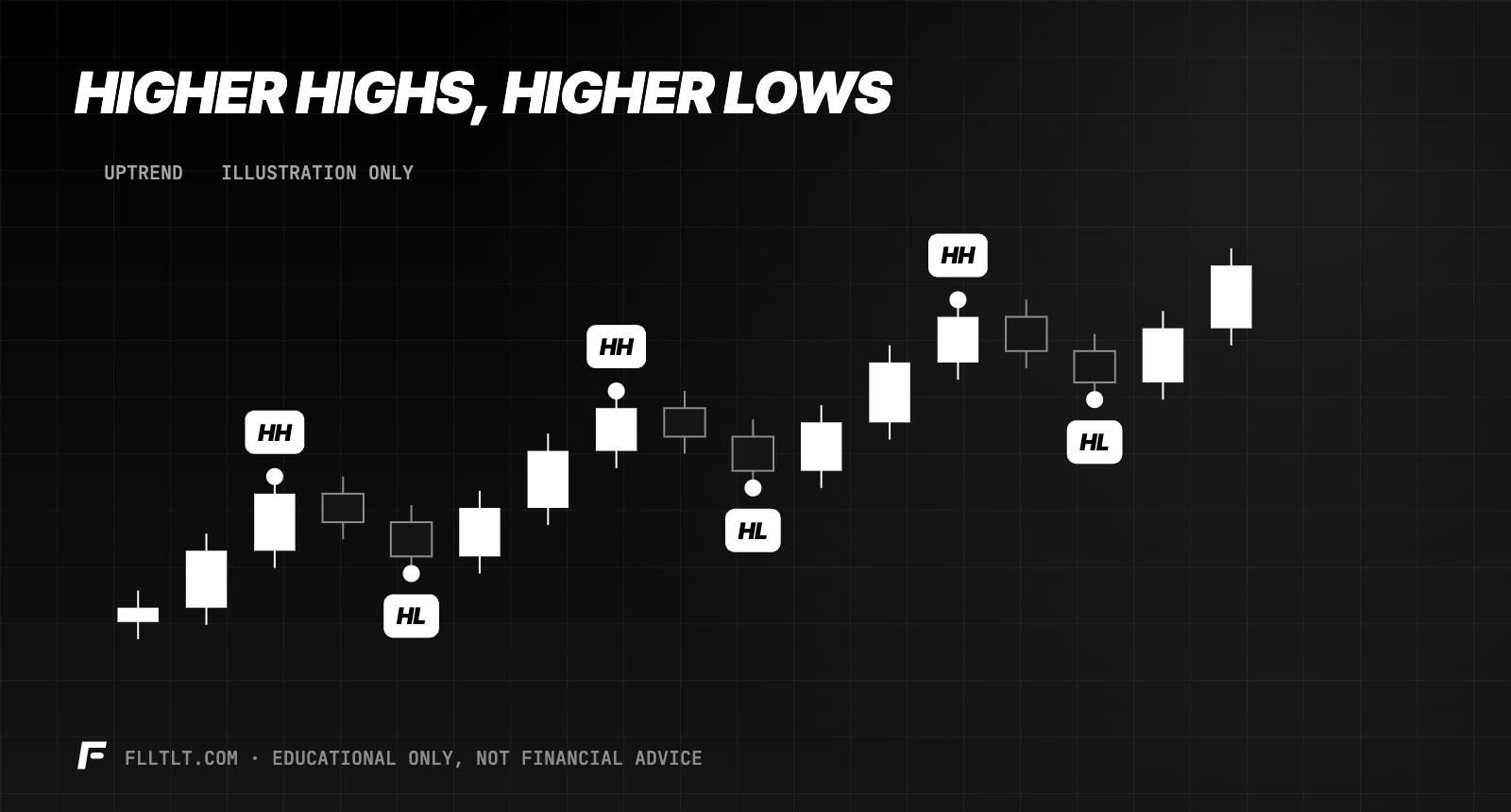
Each rally goes further than the last one (higher high), and each pullback stops before reaching the previous low (higher low). Buyers are in control, stepping in sooner on every dip. A downtrend is the mirror image.
How do you confirm a trend?
- Swings first. Mark the last few swing highs and lows. That's the trend.
- Moving average. Price mostly above a rising 20-period average supports an uptrend. See moving average pullbacks.
- VWAP. For day traders, price holding above VWAP all session points the same way.
- Higher time frame. A 5-minute uptrend inside a 60-minute downtrend is a pullback, not a new trend.
When is a trend over?
When the structure breaks. In an uptrend, the first warning is price failing to make a new high. The clearer signal is a break below the last higher low. After that, the market is either reversing or moving into a range. Don't keep buying dips once the dips stop holding.
| Market | Structure | Common approach |
|---|---|---|
| Uptrend | Higher highs, higher lows | Buy pullbacks, stops under swing lows |
| Downtrend | Lower highs, lower lows | Sell rallies, stops above swing highs |
| Range | Overlapping highs and lows | Trade the edges or stand aside |
Why does trend direction matter?
Because trading against it means fighting the side that's winning. Pullback strategies only work in trends. Range strategies only work in ranges. Knowing which one you're in decides which strategy fits the day, and which setups to skip.
From the desk Indy trades MNQ and records results in points on Day Trader Income. Checking a higher time frame before taking a 5-minute trade is a habit worth building early. It filters out a lot of trades against the bigger move.
The bottom line
Mark the swings. Higher highs and higher lows is an uptrend, lower highs and lower lows is a downtrend, and anything else is a range. Trade with the trend, put stops beyond the last swing, and step aside when the structure breaks.
FAQ
How do you identify a trend in trading?
Look at swing points. Higher highs and higher lows mean an uptrend. Lower highs and lower lows mean a downtrend. Neither means the market is ranging.
What indicator confirms a trend?
Many traders use moving averages or VWAP. Price staying above a rising average or above VWAP supports an uptrend, but the swing structure comes first.
How do you know when a trend is ending?
In an uptrend, warnings include failing to make a new high and, more clearly, a break below the last higher low.
Should I trade with or against the trend?
Most strategies work best with the trend. Trading against it means fighting the side that has been in control.