The Pre-Market Routine: A 30-Minute Checklist for Day Traders
A simple pre-market checklist: economic calendar, key levels, risk limits, platform setup and an honest check on whether you should trade at all.
On this page

The short answer: A pre-market routine is a short checklist you run before the open: check the economic calendar, mark key price levels, confirm your risk limits and set up your platform. It takes 20 to 30 minutes and means you start the session with a plan instead of reacting to the first big candle. Many traders also include a quick check of how they feel, because a bad night's sleep is a real risk factor.
Key takeaways
- Know the scheduled news times before the open.
- Mark a handful of obvious levels, not dozens.
- Write today's risk limits down before the first trade.
- Set up order templates so execution is automatic.
- If you're not in shape to trade, the best trade is none.
What should a pre-market routine include?
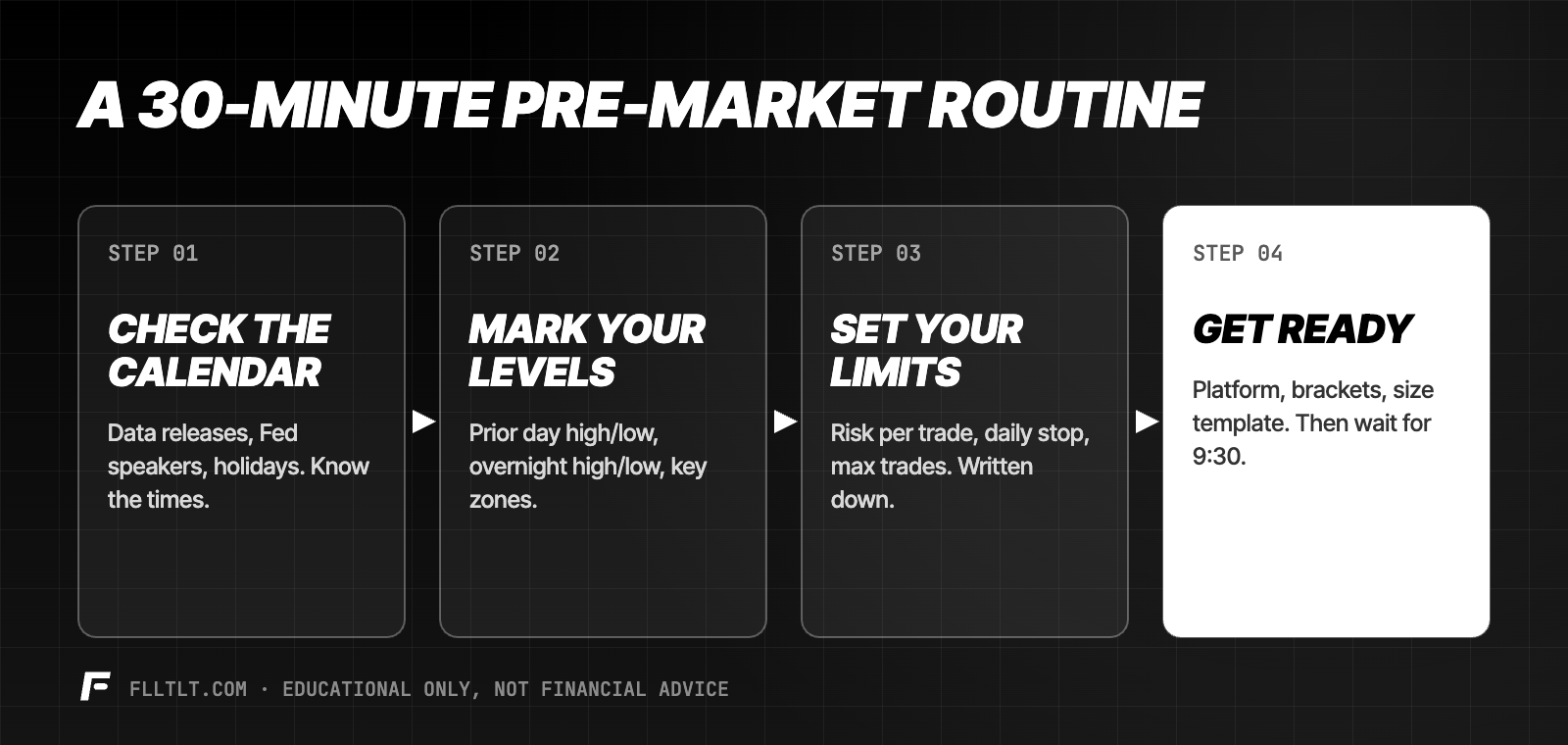
1. Check the calendar
Look up today's economic releases and their times, often 8:30 and 10:00 a.m. Eastern, plus any Fed events. Decide whether you'll trade through them or wait. See futures market hours.
2. Mark your levels
Prior day high and low, overnight high and low, and any obvious support and resistance. Note whether the bigger picture is trending or ranging using swing structure.
3. Set your limits
Write down risk per trade, daily stop and maximum trades. If you trade a prop firm account, note how far you are from the drawdown and daily limit today.
4. Get ready
Open the right contract, load your bracket template, check your size. Then close everything that isn't the chart.
What about your own state?
It's part of the routine. A quick honest check: did you sleep, are you rushed, are you still annoyed about yesterday? Many traders cut size or skip the day when the answer is bad. Tilt often starts before the first trade. More in trading on tilt.
Sample checklist
| Check | Done? |
|---|---|
| Economic calendar reviewed, times noted | ☐ |
| Prior day and overnight high/low marked | ☐ |
| Bias noted: trend up, trend down or range | ☐ |
| Risk per trade, daily stop, max trades written | ☐ |
| Distance to drawdown checked (prop accounts) | ☐ |
| Bracket template and size loaded | ☐ |
| Feeling ready to trade | ☐ |
From the desk Indy trades MNQ and records results in points on Day Trader Income. A fixed routine means the prep happens the same way every morning, whether it's a good day or a slow start.
The bottom line
Calendar, levels, limits, setup, and an honest check on yourself. Thirty minutes before the open makes the rest of the day simpler. Put it in your trading plan so it happens every day.
FAQ
What is a pre-market routine?
A short checklist traders run before the open: checking the economic calendar, marking key levels, confirming risk limits and setting up the platform.
How long should a pre-market routine take?
Many traders spend 20 to 30 minutes. The goal is to start the session with a plan, not to analyze everything.
What levels should I mark before the open?
Common ones are the prior day high and low, the overnight high and low, and clear support and resistance zones.
Should I trade if I feel off?
Many traders reduce size or skip the session when tired, rushed or upset, since emotional state affects decisions.