How to Keep a Trading Journal (What to Track and Review)
What to record on every trade, a simple journal template, how to review it weekly and the mistakes that make journals useless.
On this page

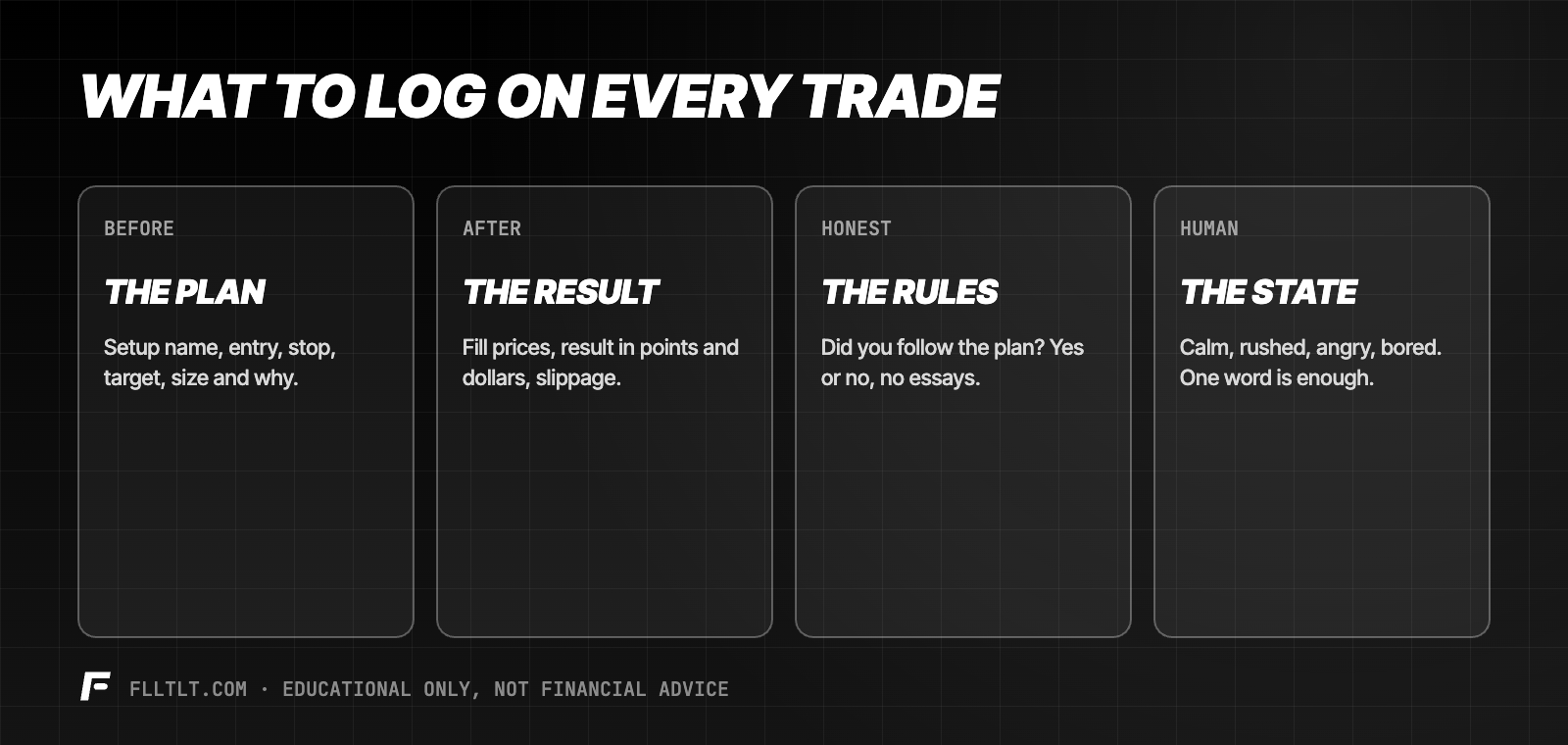
The short answer: A trading journal is a record of every trade: the setup, entry, stop, target, size, result and whether you followed your rules, plus a note on how you felt. Reviewed weekly, it shows which setups actually make money, when you trade worst and which mistakes repeat. A spreadsheet is enough. What matters is logging every trade, especially the bad ones.
Key takeaways
- Log every trade, not just the interesting ones.
- Record the plan, the result, rule-following and your state.
- Results in points make different sizes comparable.
- Review weekly and pick one thing to change.
- A simple spreadsheet works fine.
What should you record?
| Column | Example |
|---|---|
| Date / time | Nov 23, 9:42 ET |
| Contract | MNQ |
| Setup | VWAP pullback |
| Entry / stop / target | 20,010 / 19,995 / 20,040 |
| Contracts | 3 |
| Result (points) | +30 |
| Result ($) | +$180 |
| Followed plan? | Yes |
| State | Calm |
Check: 30 points × $2 × 3 contracts = $180. Recording points and dollars separately makes it easy to compare days with different sizes.
How do you review a trading journal?
Once a week, look for patterns, not stories.
- Results by setup. Which setups have positive expectancy? Drop the ones that don't.
- Results by time of day. Many traders find their best trades cluster early and their worst midday.
- Rule breaks. Count them. Then look at what happened right before each one.
- State vs result. Compare "calm" trades with "rushed" or "angry" ones.
- One change. Pick a single adjustment for next week and write it into your trading plan.
What are common journaling mistakes?
- Skipping losing days. Those are the most useful entries.
- Writing essays. Short, consistent fields beat long paragraphs you won't reread.
- Only tracking P&L. A winning trade that broke your rules is still a problem.
- Never reviewing. A journal you don't read is just a diary.
From the desk Indy trades MNQ and publishes his record in points on Day Trader Income. A public record is the strictest journal there is: no skipped days, no edited trades.
The bottom line
Log every trade with the plan, result, rule check and your state. Review weekly, look for patterns and change one thing at a time. Most traders who improve can point to the week their journal showed them something they didn't want to see.
FAQ
What should I put in a trading journal?
Record the setup, entry, stop, target, size, result in points and dollars, whether you followed your plan and a one-word note on your emotional state.
How often should I review my trading journal?
Weekly is a good rhythm. Look for patterns by setup, time of day, rule breaks and emotional state.
Do I need special software for a trading journal?
No. A simple spreadsheet works. Consistency matters more than the tool.
Why record results in points?
Points make trades with different position sizes comparable, so you can judge the setup separately from the size.